Corbett Report Interview on the Kyrgyzstan-US Rift

James Corbett invited me back on his show to discuss Kyrgyzstan’s recent decision to renounce the 1993 cooperation treaty with the United States and how this fits into a larger trend in U.S.-Kyrgyz relations.

You can find the show notes for our discussion on James’ website:
https://www.corbettreport.com/interview-1070-christoph-germann-on-the-kyrgyzstan-us-rift/

The New Great Game Round-Up #106

The Great Game Round-Up brings you the latest newsworthy developments regarding Central Asia and the Caucasus region. We document the struggle for influence, power, hegemony and profits between a U.S.-dominated NATO, its GCC proxies, Russia, China and other regional players.

On July 31, representatives of the Afghan government and the Taliban were scheduled to meet in Pakistan for the second round of the recently launched Afghan peace talks. The first round of talks in the hill resort of Murree just outside Islamabad was hailed as a “breakthrough,” raising hopes that the warring parties could come to an agreement. Pakistan's efforts to facilitate the meeting and the attendance of Chinese and U.S. officials signaled widespread support for the peace talks. But just as people were getting their hopes up, two days before the next meeting in Pakistan, BBC's Afghan Service dropped a bombshell by reporting the death of Taliban leader Mullah Omar. Two weeks earlier, the Taliban leader had purportedly endorsed the peace talks in a statement posted on the Taliban's official website, making the reports of his death all the more surprising. It was not the first time that Mullah Omar's death has been reported but this time everyone agreed that Mullah Omar was dead:

Afghan government formally confirms death of Mullah Omar

The government of Afghanistan formally confirmed the death of Taliban supreme leader Mullah Mohammad Omar.

A statement by the President Palace said “The government of the Islamic Republic of Afghanistan, based on credible information, confirms that Mullah Mohammad Omar, leader of the Taliban died in April 2013 in Pakistan.”

The statement further added “The government of Afghanistan believes that grounds for the Afghan peace talks are more paved now than before, and thus calls on all armed opposition groups to seize the opportunity and join the peace process.”

Read more

The New Great Game Round-Up #105

The Great Game Round-Up brings you the latest newsworthy developments regarding Central Asia and the Caucasus region. We document the struggle for influence, power, hegemony and profits between a U.S.-dominated NATO, its GCC proxies, Russia, China and other regional players.

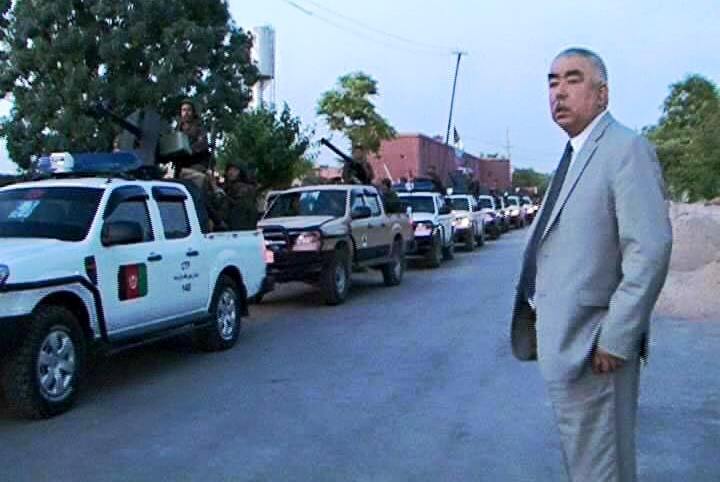
As the situation in northern Afghanistan deteriorates further, the neighboring Central Asian states as well as Russia and China are becoming increasingly worried about a possible spillover of violence. The United States, on the other hand, has dismissed these concerns from the beginning and continues to insist that the security situation in Afghanistan poses no threat to the neighboring 'stans. This is a bold claim in light of the territorial gains by the Taliban and other militant groups in Faryab province, which borders Turkmenistan. A few days ago, insurgents blew up an electricity tower in Faryab, disrupting electricity supply to the provincial capital Maymana and four other districts. It was the second time in one week that the power supply lines have been cut due to the fighting. Since pro-government militias are retreating in most areas and Maymana is in danger of falling to militants, the Afghan government wants to launch a major military operation in the province as soon as possible:

Major operation on the way in northern Faryab province

A major military operation is due to kick off in northern Faryab province of Afghanistan to clear the under the control of the Taliban militants.

The operation is expected to be launched jointly by the Afghan national security forces including Afghan special forces along with the anti-Taliban public uprising forces.

A lawmaker representing northern Faryab province in the Lower House of the Parliament – Wolesi Jirga, told Radio Free Europe (RFE) that the operation will be conducted as per the instructions of the First Vice President.

Read more

The New Great Game Round-Up #104

The Great Game Round-Up brings you the latest newsworthy developments regarding Central Asia and the Caucasus region. We document the struggle for influence, power, hegemony and profits between a U.S.-dominated NATO, its GCC proxies, Russia, China and other regional players.

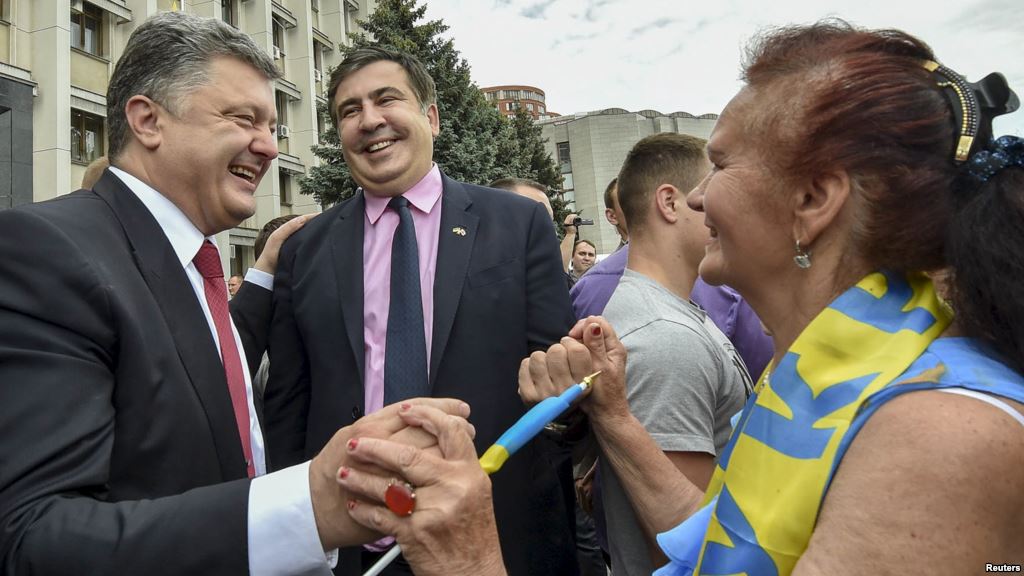
Ukrainian President Petro Poroshenko is now fighting on multiple fronts after the neo-Nazis from Pravyi Sektor recently turned their attention from the evil Russkies to the regime in Kiev. As the west of the country descends into chaos as well, the Odessa region under the leadership of Poroshenko's buddy Mikheil Saakashvili is becoming Kiev's showcase project. Odessa is supposed to show the world that Ukraine is headed in the right direction and the former Georgian President and his minions are tasked with guiding “Ukraine's reforms path away from Russia.” After bringing in several of his compatriots, Saakashvili is now looking for other “talents” to improve his team. The 25-year-old Euromaidan activist Yulia Marushevska, who became famous for her appearance in the “I Am a Ukrainian” propaganda video, was the obvious choice and Saakashvili's next appointment was even more fitting:

Russian shock therapy reformist's daughter to work for Saakashvili

Chairman of Odesa Regional State Administration Mikheil Saakashvili on Friday introduced as his new deputy the Russian opposition politician, journalist, social activist Maria Gaidar, who is a daughter of Yegor Gaidar, the architect of the controversial shock therapy reforms in post-Perestroika Russia, according to local news portal Dumskaya.

“All Ukrainians, all Europeans and all Russians are looking at Odesa. The successful changes in Odesa will influence the situation in the world,” Gaidar said, Dumskaya wrote.

According to Saakashvili, she will be in charge of social issues. Her official appointment should be enacted by President Petro Poroshenko in the near future.

© Photo Gazeta.Ru

Read more

The New Great Game Round-Up #103

The Great Game Round-Up brings you the latest newsworthy developments regarding Central Asia and the Caucasus region. We document the struggle for influence, power, hegemony and profits between a U.S.-dominated NATO, its GCC proxies, Russia, China and other regional players.

Turkey's far-right National Movement Party (MHP) and its paramilitary youth wing, the Grey Wolves, have been leading the protests against “China's brutality in East Turkestan.” Korean tourists and the Uyghur cook of a Chinese restaurant in Istanbul were the first ones to learn that Turkish ultranationalists don't flinch from using violence to protest China's “Ramadan ban” or other Chinese misdeeds. Even after Turkish police had to rescue the Korean tourists, MHP leader Devlet Bahceli tried to play down the recent wave of ultranationalist attacks and defended the attackers by pointing out that Chinese and Koreans both “have slanted eyes.” While MHP-linked groups began openly printing death threats against Chinese, Beijing warned Chinese citizens traveling in Turkey to be on guard and stay away from anti-China protests. Amid rising tensions, Thailand further aggravated the situation by sending 173 Uyghur women and children to Turkey and then returning about 100 Uyghur migrants to China:

Thailand sends nearly 100 Uighur migrants back to China

Thailand confirmed on Thursday it had forcibly returned nearly 100 Uighur migrants to China, heightening tensions between Ankara and Beijing over the treatment of the Turkic language-speaking and largely Muslim minority.

“Thailand sent around 100 Uighurs back to China yesterday. Thailand has worked with China and Turkey to solve the Uighur Muslim problem. We have sent them back to China after verifying their nationality,” Colonel Weerachon Sukhondhapatipak, deputy government spokesman, told reporters on Thursday.

A group of more than 170 Uighurs were identified as Turkish citizens and sent to Turkey, and nearly 100 were identified as Chinese and sent back to China. Fifty others still need to have their citizenship verified.

Read more

The New Great Game Round-Up #102

The Great Game Round-Up brings you the latest newsworthy developments regarding Central Asia and the Caucasus region. We document the struggle for influence, power, hegemony and profits between a U.S.-dominated NATO, its GCC proxies, Russia, China and other regional players.

The U.S. Supreme Court ruling legalizing same-sex marriage across the entire country was widely celebrated in the U.S. and many other countries but not everyone welcomed the decision. Western media, which is more concerned about LGBT rights in Russia than in any other country, awaited eagerly how Russians would react to the ruling. The Washington Post was dumbfounded when influential journalist Dmitry Kiselyov and other prominent Russian figures didn't react as expected but fortunately Western journalists still got the reaction they were looking for. What went largely unnoticed is that Russians are not the only ones who see the U.S. Supreme Court ruling as a “big mistake.” Georgian Prime Minister Irakli Garibashvili assured his compatriots that he will do his best to prevent legalizing same-sex marriage in Georgia. This resonates with many people in his country. More and more Georgians are wondering whether Euro-Atlantic integration is really worth the trouble:

Spurned by the West, Georgians look to Russia despite past quarrels

In this fiercely pro-Western nation that fought a brief war with Russia in 2008, few thought the Kremlin could ever regain a toehold. But with the West backing away from Georgia’s path to E.U. and NATO membership after a year of conflict in Ukraine, pro-Russian sentiments are on the rise.

“More and more Georgians are feeling they haven’t gotten anything tangible from the West,” said Shorena Shaverdashvili, a prominent Georgian journalist. “There isn’t more love for Putin and Russia. It’s just a realization that we’re left face-to-face with Russia and we have to deal with it.”

“Georgia should be neutral, and it should be militarily free,” said Archil Chkoidze, the leader of Georgia’s Eurasian Choice, a coalition of pro-Russian groups that says it has nearly 16,000 members. Among the warnings about Europe that he passes to his members, he said, was that E.U. leaders are more concerned with cultural issues such as gay rights — deeply unpopular in a socially conservative nation — rather than the everyday lives of Georgian citizens.

Read more

The New Great Game Round-Up #101

The Great Game Round-Up brings you the latest newsworthy developments regarding Central Asia and the Caucasus region. We document the struggle for influence, power, hegemony and profits between a U.S.-dominated NATO, its GCC proxies, Russia, China and other regional players.

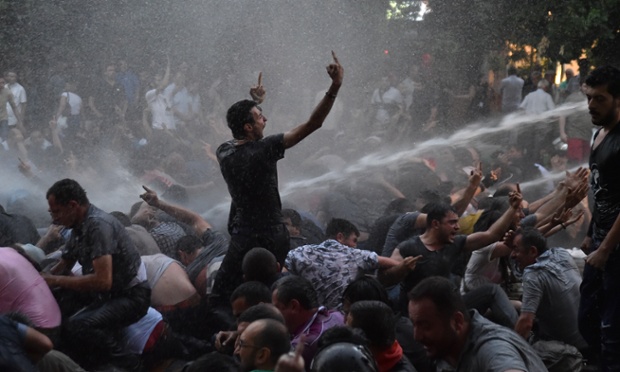
When the Armenian authorities reluctantly approved a request by the country's energy monopoly, Electric Networks of Armenia (ENA), to increase electricity tariffs from the beginning of August by 7 Armenian dram (1.5 U.S. cent), President Serzh Sargsyan and his government didn't expect that this could turn into a huge problem. They knew full well that ENA was trying to compensate for its losses, which had been caused by graft, but figured that the people would put up with yet another rate increase – the third one over the past two years. However, this time many Armenians decided that enough was enough. What started with a small sit-in in the center of Yerevan on June 19 soon evolved into huge protests on Baghramyan Avenue. As more and more people joined “Electric Yerevan,” the government began to understand the gravity of the situation and tried to nip the protests in the bud:

Armenian Police Forcefully Disperse Yerevan Protesters, 18 Injured

Armenian police used force and water cannons to clear a demonstration in central Yerevan overnight after a standoff with activists protesting against rising electricity prices.

In the early hours of June 23, special police forces moved to disperse hundreds of protesters who spent more than nine hours seated in the street not far from the presidential compound.

The protesters insisted that their actions were peaceful and demanded that President Serzh Sarkisian revoke the decision made by state regulators to raise electricity prices by 16 percent beginning August 1.

© Photo PHOTOLURE News Agency/Demotix/Corbis

Read more

Porkins Great Game: Episode #8 – Proxy War in Transnistria

On this edition of Porkins Great Game, Pearse Redmond and I discuss the appointment of former Georgian President Mikheil Saakashvili as governor of Ukraine's Odessa region and how this ties in with recent developments surrounding the pro-Russian breakaway region of Transnistria. We also take a look at the European Games in Azerbaijan and OMV's plans to build a 'Russian Nabucco' before we move on to Afghanistan. Pearse and I discuss what has been going on in northern Afghanistan recently and explain why the rivalry between the Taliban and ISIS spells more trouble for the war-torn country. We close out this month's episode with two weird terrorism stories involving Tajikistan's OMON commander, ISIS, “Syrian rebels” and British intelligence agencies.

Read more

The New Great Game Round-Up #100

The Great Game Round-Up brings you the latest newsworthy developments regarding Central Asia and the Caucasus region. We document the struggle for influence, power, hegemony and profits between a U.S.-dominated NATO, its GCC proxies, Russia, China and other regional players.

Every few days, Afghanistan is making headlines due to the deteriorating security situation in the country, the most recent example being the Taliban attack on the Afghan parliament on Monday. As Afghan lawmakers were trying to confirm a defense minister, a large explosion rocked the parliament building in Kabul. The attack by a suicide bomber was the signal for fellow Taliban fighters, who had taken positions in a nearby building, to open fire. After an intense firefight, security forces managed to kill all six gunmen but the latest Taliban attack, which left two civilians dead and 40 injured, raises again questions over the government's ability to maintain security. Statements by Taliban spokesman Zabihullah Mujahid suggest that the purpose of the attack was to embarrass the “puppet administration” in Kabul “at a time which they were casting confidence vote for the minister of defense.” It is safe to say that the Taliban achieved their goal. The Kabul government is looking increasingly shaky:

Taliban and Afghan Government Dispute Status of Kunduz

After Taliban insurgents said Sunday that they were on the verge of taking their first city, Kunduz in the far north of Afghanistan, officials there expressed alarm as residents began to flee the area. But the central government in Kabul said there was no cause for concern.

The Afghan government also announced Sunday that it had retaken the administrative center of Yamgan District, in northern Badakhshan Province, from the Taliban. But that only deepened the government’s credibility problem because just a week earlier officials in Kabul had claimed that they had already retaken Yamgan.

For months now, several districts in both Kunduz and Badakhshan Provinces in the north have gone back and forth between government and Taliban control, as the insurgents have intensified their fighting in parts of northern Afghanistan where they traditionally had been weak.

Read more
The New Great Game Round-Up #99

The Great Game Round-Up brings you the latest newsworthy developments regarding Central Asia and the Caucasus region. We document the struggle for influence, power, hegemony and profits between a U.S.-dominated NATO, its GCC proxies, Russia, China and other regional players.

Ukrainian oligarch-turned-President Petro Poroshenko is not very popular among his people but at least his equally criminal friends continue to support him and that is what really matters. Former Georgian President Mikheil Saakashvili was so thrilled about Poroshenko's first year in power that he wrote an op-ed for Newsweek lauding Poroshenko's reform program, better known as the “4-Ds”- de-regulation, de-bureaucratization, de-centralization and de-oligarchization(!). According to Saakashvili, his buddy Poroshenko “has succeeded in nation-building, at a rapid pace.” Never mind that most Ukrainians think that Poroshenko and the current regime are to blame for Ukraine's economic problems and that they are not doing enough to stop the war in the country. One wonders what they will say when they realize that Poroshenko and Saakashvili are trying to open another front in this war:

Saakashvili announces plans to reinforce border with Transdniestria

Governor of Ukraine’s Odessa region Mikhail Saakashvili said on Tuesday he plans to reinforce Ukraine’s border with the unrecognized republic of Transdniestria.

“We have two major tasks – to reinforce the border and curb corruption. Drug and weapons trafficking across this border mean nothing good,” he told a news conference in Odessa.

Engineering works aiming to block movement of military hardware and contraband started at the Transdniestrian section of the Ukrainian-Moldovan border.

Read more

Design a site like this with WordPress.com
Get started