In our first episode of 2015, Pearse and I talk about the most recent attack in the Chechen capital of Grozny and explain why Chechen Republic head Ramzan Kadyrov targeted Ukraine und Turkey in response to the attack. We examine Turkey's role in U.S.-NATO terror operations and take a look at the capture of top al-Qaeda/LIFG operative Abd al-Baset Azzouz in a summer resort south of Istanbul a few weeks ago. After highlighting the parallels to other cases, we end this segment by discussing Strobe Talbott's “prediction” of a third Chechen war in 2015.
Other topics include the demise of the South Stream pipeline, the increasing violence along the Tajik-Afghan border with all its implications and the start of the Boston bombing trial. At the end of this episode, Pearse and I share our predictions for possible developments in Central Asia and the Caucasus region in 2015.
The New Great Game Round-Up #81
The Great Game Round-Up brings you the latest newsworthy developments regarding Central Asia and the Caucasus region. We document the struggle for influence, power, hegemony and profits between a U.S.-dominated NATO, its GCC proxies, Russia, China and other regional players.
After 13 years of death and destruction, the United States and NATO “formally” ended their war in Afghanistan last weekend with a symbolic ceremony in Kabul. U.S. President Barack Obama used the opportunity to blow his own trumpet and NATO Secretary General Jens Stoltenberg emphasized that the NATO-led International Security Assistance Force (ISAF) has carried out its mandate “at great cost but with great success.” ISAF's mandate was indeed carried out at great cost but the U.S. and its allies failed to achieve any of their claimed long term objectives and the Taliban lost no time in reminding Obama, Stoltenberg & Co. of their defeat in the longest war in American history. Contrary to what Western politicians and media have been saying in recent days, the war will go on with no significant changes on the ground. As previously discussed, about 13,000 troops and thousands of contractors will stay in Afghanistan and the troops will have a direct combat role because the Afghan security forces are not up to the task despite years of “successful” training by NATO. At the beginning of this week, ISAF spokesperson Chris Belcher stressed that the Afghan forces are prepared to take the lead in providing security but it did not take long before his words were proven wrong:
Afghans take over full security charge, mortars kill 20 civilians
Afghanistan assumed full responsibility for security from departing foreign combat troops on Thursday, a day after Afghan army mortar shells killed at least 20 civilians attending a wedding party in volatile southern Helmand province.
General Mahmoud, the deputy Commander of the Afghan 215 corps in the province, said artillery was fired from three directions at a village in Sangin district where the wedding was held on Wednesday.
“What we know so far is that our soldiers fired mortar rounds from three outposts but we do not know whether it was intentional,” Mahmoud told Reuters.

The New Great Game Round-Up #80
The Great Game Round-Up brings you the latest newsworthy developments regarding Central Asia and the Caucasus region. We document the struggle for influence, power, hegemony and profits between a U.S.-dominated NATO, its GCC proxies, Russia, China and other regional players.
At the end of last year, the Volgograd bombings highlighted that Russia is still struggling with the foreign-backed insurgency in the North Caucasus and 2014 ends on a similar note due to this month's clashes in the Chechen capital Grozny. Although the overall security situation in the North Caucasus has improved significantly over the years, the attacks in Volgograd last year as well as the attacks in Grozny in October and December of this year serve as a stark reminder that terrorists can strike at any time, anywhere in the region. Violence in Russia's volatile south has long been associated with Chechnya but the neighboring Republic of Dagestan has become Russia's hot spot of insurgent activity in recent years. The leaders of the Dagestani insurgency just pledged loyalty to ISIS, defying the leader of the Caucasus Emirate and perhaps spelling more trouble for Russia's security services. One of the frequent special operations in Dagestan resulted last week in the killing of the leader of a terrorist group linked to the 2013 Volgograd bombings and a number of other attacks in Dagestan. While the Dagestani authorities have their work cut out, the Chechen authorities are free to support the resistance in eastern Ukraine and, unperturbed by the attacks in Grozny, Chechen Republic head Ramzan Kadyrov announced this week that he wants to focus more on Ukraine:
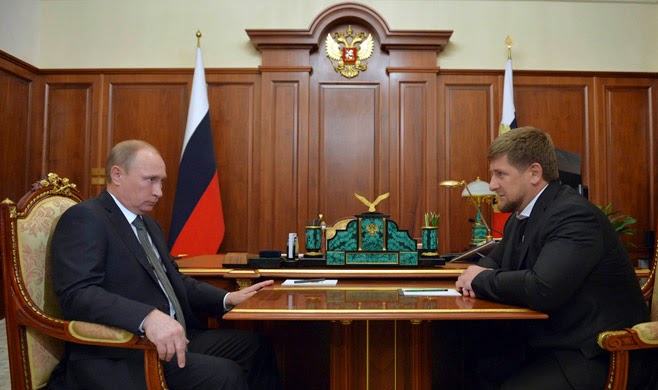
Chechen leader Ramzan Kadyrov wants to quit his high post to go to help militias in Donbas
Chechen leader Ramzan Kadyrov said on Tuesday that he wanted to quit his high state post and leave for Ukraine’s Donbas region to help the local militias, the NTV channel reported on its website.
Commenting on initiation of criminal proceedings against him in Ukraine and Kiev’s threats to put him on the international wanted list, Kadyrov told NTV’s “Bez Kupyur” (Without Banknotes) program that they could keep wagging their tongues for as long as they liked.
“They can keep saying whatever they like. But I am going to ask the (Russian) president for permission to quit my post in order to go to Donbass to protect the interests of those citizens who are fighting there now,” Kadyrov said.
 |
| © Photo RIA Novosti/Alexei Druzhinin |
The New Great Game Round-Up #79
The Great Game Round-Up brings you the latest newsworthy developments regarding Central Asia and the Caucasus region. We document the struggle for influence, power, hegemony and profits between a U.S.-dominated NATO, its GCC proxies, Russia, China and other regional players.
While U.S. President Barack Obama is still trying to convince the public that Russia is completely isolated, Russian President Vladimir Putin paid official visits to Uzbekistan and India, strengthening Russia's ties with the two countries. On December 10, the Russian President traveled to Tashkent, where he held talks with his Uzbek counterpart Islam Karimov. Putin's visit was a show of support for Karimov ahead of upcoming parliamentary and presidential elections in Uzbekistan, which could get interesting for a change given that Karimov has not stated whether he will stand for re-election as president. Russian-Uzbek relations have been tense since the end of the Soviet Union and the Karimov regime has always been a difficult partner for Russia but the Kremlin is now looking to forge closer ties with Uzbekistan, regardless of who is running the country. The two presidents signed an important agreement, significantly reducing Uzbekistan's debt to Russia in order to pave the way for new loans from Moscow, which are intended for a particular purpose [emphasis mine]:
Russia Cozies Up to Uzbekistan With $865 Million Debt Write-Off
Russia on Wednesday wrote off $865 million of debt owed by Uzbekistan as President Vladimir Putin sought to bolster ties between the former Soviet republics during a one-day visit to the country, news agency TASS reported.
The agreement, which was signed in the presence of Putin and his Uzbek counterpart Islam Karimov, freed Uzbekistan from almost all of its $890 million debt to Russia. Uzbekistan will have to pay just $25 million, Russian Finance Minister Anton Siluanov said Wednesday.
Presidential aide Yury Ushakov said Wednesday that settling the debt issue will allow Russia to expand sales of arms and military equipment in the country, TASS reported.
 |
| © Photo AFP |
The New Great Game Round-Up #78
The Great Game Round-Up brings you the latest newsworthy developments regarding Central Asia and the Caucasus region. We document the struggle for influence, power, hegemony and profits between a U.S.-dominated NATO, its GCC proxies, Russia, China and other regional players.
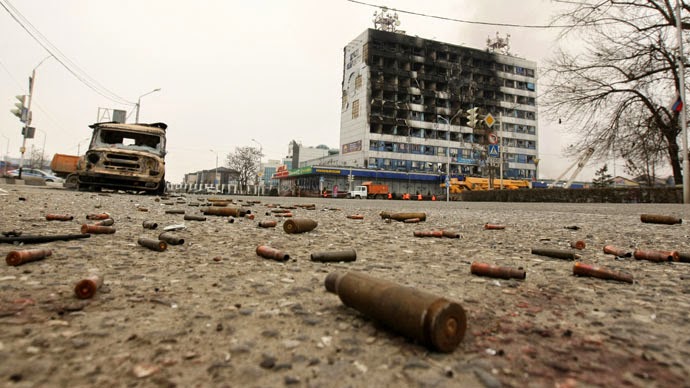
At the beginning of October, a suicide bombing struck the Chechen capital Grozny, reminding the Chechen and Russian authorities that the foreign-backed insurgency in the North Caucasus, which has been largely confined to Dagestan in recent years, could also rear its ugly head again in Chechnya. Although Chechen police stopped the suicide bomber in time to prevent a far more devastating attack, the bombing sent a strong message because it happened in peaceful Grozny on October 5, when Chechen President Ramzan Kadyrov was celebrating his birthday, residents of Grozny were celebrating City Day and Muslims around the world were celebrating Eid al-Adha. After the attack in October, which left five police officers dead and twelve wounded, things returned to normal in Chechnya but this week, on the eve of Vladimir Putin's annual state-of-the-nation address, Grozny was again the center of attention as heavy fighting rocked the city, calling to mind the violence in the 1990s:
Gun Battle Breaks Out In Grozny, Chechnya, Leaving At Least 19 Dead
Security forces in the capital of Russia's North Caucasus republic of Chechnya stormed two buildings, including a school, in fierce gun battles with militants early Thursday that left at least 19 dead, authorities said.
The National Anti-Terrorist Committee said militants traveling in three cars entered the republic's capital, Grozny, at 1 a.m., killing three traffic police at a checkpoint, and then occupied the 10-story Press House in the center of the city. The federal agency said six gunmen were killed inside the building, which was gutted in a blazing fire that also spread to a nearby market.
More gunmen were later found in a nearby school and security forces were sent to “liquidate” them, the agency said. No students or teachers were in the school when it was seized by the militants, RIA Novosti quoted vice principal Islam Dzhabrailov as saying.
Gladio B and the Battle for Eurasia
Studium Generale Groningen recently hosted a lecture series on “The Battle for Resources,” which ended with an excellent presentation by James Corbett on Operation Gladio B. In this presentation, James Corbett lifts the lid on Gladio B, its covert operatives, and the secret battle for the Eurasian heartland (transcript and sources):
Porkins Great Game: Episode #3 – Afghan Withdrawal, Kyrgyz Maidan & Trouble in Georgia
On this edition of Porkins Great Game, Pearse Redmond and I talk all things Afghanistan: the booming opium production, Turkmenistan's invasion, NATO's “withdrawal” and China's growing role in the war-torn country. We also examine the possibility of a Euromaidan-style color revolution in Kyrgyzstan and the sacking of Georgian Defense Minister Irakli Alasania, which caused a great stir in Brussels and Washington.
The New Great Game Round-Up #77
The Great Game Round-Up brings you the latest newsworthy developments regarding Central Asia and the Caucasus region. We document the struggle for influence, power, hegemony and profits between a U.S.-dominated NATO, its GCC proxies, Russia, China and other regional players.
In May of this year, China launched a one-year-long no-holds-barred anti-terror campaign in its far-western Xinjiang region after a major terrorist attack had struck Xinjiang's capital Urumqi, killing 43 people and wounding more than 90. In the last six months, the Chinese authorities have been arresting everyone and his brother to stop the violence in Xinjiang, including prominent Uyghur scholar Ilham Tohti, who was sentenced to life in prison on charges of advocating separatism and inciting ethnic hatred. Western governments and media did their best to highlight Tohti's imprisonment and called repeatedly for his release, to no avail. Last week, a court in Urumqi upheld the life sentence and a few days later the same court opened separatism trials for seven of Tohti's students. While Western media criticized the latest act of Chinese repression, Chinese media lauded the results of the first six months of the anti-terror campaign. According to China's Ministry of Public Security, 115 terrorist cells were quashed and more than 300 suspects detained. But only a few days after the ministry released its report, another terrorist attack reminded everyone that the violence continues:
15 killed, 14 injured in Xinjiang terrorist attack
Fifteen people, including 11 mobsters, were killed and 14 people were injured in a terrorist attack in Shache County on Friday afternoon in northwest China's Xinjiang Uygur Autonomous Region, local authorities announced in a statement on Saturday.
The mobsters threw out explosive devices and attacked civilians with knives at a food street in the county around 1:30 p.m. on Friday. Police patrolling nearby killed 11 of them.
A number of explosive devices, knives and axes were found at the scene.
 |
| © Photo AFP |
The New Great Game Round-Up #76
The Great Game Round-Up brings you the latest newsworthy developments regarding Central Asia and the Caucasus region. We document the struggle for influence, power, hegemony and profits between a U.S.-dominated NATO, its GCC proxies, Russia, China and other regional players.
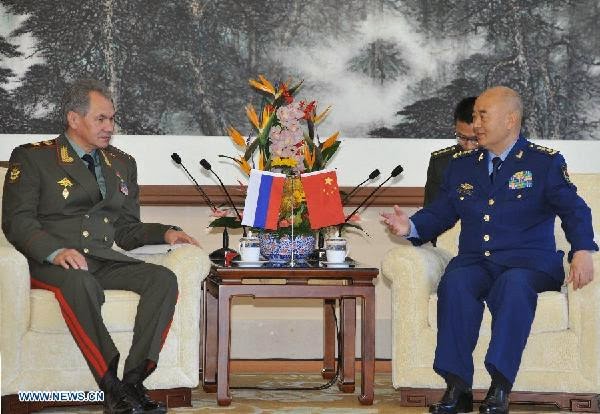
So-called color revolutions have long been used by the United States to replace governments all over the world with more pliable alternatives if the respective leaders have outlived their usefulness or antagonized Washington, the most recent example being the Euromaidan in Ukraine. After Ukrainian President Viktor Yanukovych refused to sign an Association Agreement with the European Union, the U.S. and its allies launched Orange Revolution 2.0 to ensure Kiev's commitment to Euro-Atlantic integration and to nip Ukraine's accession to the Russia-led Eurasian Economic Union (EEU) in the bud. On November 21, Ukrainians gathered in Kiev to mark the first anniversary of the start of the fateful anti-government protests, which have plunged the country into war, leading to a new confrontation between Russia and the West. In light of the developments in Ukraine, many governments are increasingly alarmed at color revolutions. Especially Russian officials have been repeatedly warning against this “new form of warfare” in recent months. A few days ago, President Putin urged Russian security chief to do everything necessary to prevent a color revolution in Russia and the issue was also high on the agenda during this week's talks between Russian and Chinese defense ministers:
Russia, China should jointly counter “color revolutions” — Russian Defense Ministry
Russia and China should jointly stand against “color revolutions” which both countries are facing, a deputy Russian defence minister said after talks between Russian and Chinese defence chiefs on Tuesday.“We focused on those events which have recently taken place in Hong Kong, and both ministers acknowledged that no country is immune from ‘color revolutions,’” Anatoly Antonov said.
“It only seems that these “color revolutions” and these experiments by Western spin doctors, including those from the United States, are being implemented somewhere far from China or the Russian Federation,” Antonov said. “All this is in fact near us, and we believe that Russia and China should work together to withstand this new security challenge to our countries.”
 |
| © Photo Xinhua/Gao Jie |
The New Great Game Round-Up #75
The Great Game Round-Up brings you the latest newsworthy developments regarding Central Asia and the Caucasus region. We document the struggle for influence, power, hegemony and profits between a U.S.-dominated NATO, its GCC proxies, Russia, China and other regional players.
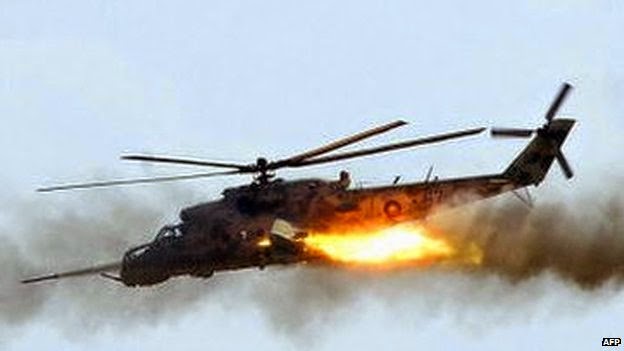
Three months ago, Armenia and Azerbaijan were on the brink of all-out war after the worst clashes in years over the disputed Armenian enclave of Nagorno-Karabakh in Azerbaijan had left more than a dozen soldiers dead. Russian President Vladimir Putin brought both sides to the negotiating table to prevent a further escalation of the conflict and Azerbaijani President Ilham Aliyev readily agreed to postpone the recapture of Nagorno-Karabakh, which fueled speculation that Baku had provoked the clashes for political reasons. Azerbaijan has shown a pattern of provoking such events in order to get the international community to devote more attention to the conflict. Moreover, the escalation of violence in late July/early August coincided with a crackdown on human rights activists and NGOs. After this short period of heavy fighting the situation calmed down and last month French President Francois Hollande hosted “constructive” talks between Aliyev and his Armenian counterpart Serzh Sargsyan. The two leaders agreed to continue the dialogue to find a negotiated peace to the Karabakh conflict but this week's downing of an Armenian helicopter doesn't bode well for the shaky peace process:
The armed forces of Azerbaijan shot down and destroyed an Armenian military helicopter in the Nagorno-Karabakh region on Wednesday, the defense ministries of both countries said.
The incident threatened to set off another cycle of violence between the two South Caucasus neighbors over Nagorno-Karabakh, which is part of Azerbaijan but along with some surrounding territory has been under the control of Armenian soldiers and local Armenian forces since a 1994 cease-fire.
Nagorno-Karabakh said the helicopter belonged to its armed forces and was on a training flight near the cease-fire line. All three crew members on board were killed, a high-ranking officer with the Nagorno-Karabakh forces told the AP. The officer was speaking on condition of anonymity because he was not authorised to release the information.
 The Venezuela News, The Venezuela Latest