The Great Game Round-Up brings you the latest newsworthy developments regarding Central Asia and the Caucasus region. We document the struggle for influence, power, hegemony and profits between a U.S.-dominated NATO, its GCC proxies, Russia, China and other regional players.
At the beginning of this month, the United States handed back its only Central Asian air base to the government of Kyrgyzstan, after the Kyrgyz authorities had caved in to Russian pressure and refused to extend the lease on the Transit Center at Manas. Symbolizing the rocky relationship between the U.S. and Kyrgyzstan, a U.S. civilian contractor at the base, who had attempted to rape a local woman, was sentenced to four years in prison on the same day the Americans officially closed the Manas base. Romania is now hosting the Pentagon's Afghanistan air logistics hub but since the Americans do not plan to leave Afghanistan or Central Asia anytime soon, a new Central Asian air base is needed as well:
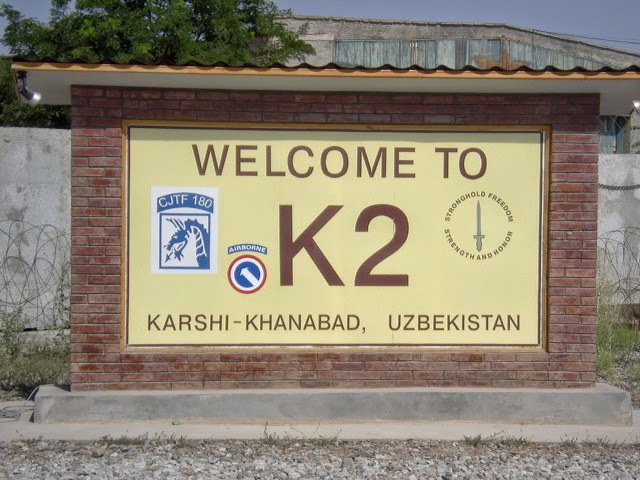
Uzbekistan may provide Khanabad Airfield to U.S. to replace Kyrgyzstan's Manas
Minister of Foreign Affairs of Uzbekistan Abdulaziz Kamilov and U.S. Deputy Special Representative for Afghanistan and Pakistan Laurel Miller discussed the current situation in Afghanistan and its impact on the processes within the region, according to an official statement of the press service of the Uzbekistan's Ministry.
Experts believe that the U.S. is looking for a new platform to support its troops in Afghanistan upon the withdrawal from the Kyrgyzstan's Transit Center at Manas Airport.
In Uzbekistan, the U.S. is interested in Khanabad Airfield that had been already provided to them in 2001. However, after the 2005 events in Andijan, the U.S. was expelled from the country for their support of local radicals. In response, Washington imposed a series of sanctions against Tashkent. Five years later, the U.S., however, realized what they had lost and began to seek the resumption of cooperation with Tashkent.



 The Venezuela News, The Venezuela Latest