The New Great Game Round-Up #49

The Great Game Round-Up brings you the latest newsworthy developments regarding Central Asia and the Caucasus region. We document the struggle for influence, power, hegemony and profits between a U.S.-dominated NATO, its GCC proxies, Russia, China and other regional players.

On April 27, Chinese President Xi Jinping arrived in China's Xinjiang Uyghur Autonomous Region, where he spent four days visiting schools, factories and companies as well as inspecting local armed police and watching a military exercise. Xi's visit came amid increasing efforts by the local authorities to contain “potential hazards to society” including growing too much facial hair. China's President lauded the efforts and emphasized the importance of Xinjiang's long-term stability to the whole nation. Therefore, fighting separatism takes top priority and Xi stated that China will deploy a “strike-first” strategy against terrorists in the region. Only hours after the Chinese leader had finished his four-day trip, the terrorists were the ones who struck first:

Three dead, 79 injured in Xinjiang railway station terrorist attack

Three people were confirmed dead and 79 others were injured in a violent terrorist attack at a railway station in Urumqi, capital of northwest China's Xinjiang Uygur Autonomous Region on Wednesday evening.

Four people are seriously injured but in stable condition, said the publicity department of the regional committee of the Communist Party of China.

Read more

The New Great Game Round-Up #48

The Great Game Round-Up brings you the latest newsworthy developments regarding Central Asia and the Caucasus region. We document the struggle for influence, power, hegemony and profits between a U.S.-dominated NATO, its GCC proxies, Russia, China and other regional players.

While tensions are mounting in eastern Ukraine after U.S. Vice President Joe Biden had instructed Washington's puppet regime in Kiev to ignore the Geneva agreement and escalate the situation, the European Union sent two of its most notorious warmongers to another front in the new Cold War against Russia. The Foreign Ministers of Germany and France, Frank-Walter Steinmeier and Laurent Fabius, visited Georgia and affirmed plans to speed up the signing of the now infamous EU Association Agreement with Russia's southern neighbor:

France, Germany show EU support for Georgia as Ukraine crisis mounts

France and Germany assured Georgia on Thursday that a deal bringing it closer to the European Union would be sealed within weeks, moving to tighten ties with the ex-Soviet republic as tension mounts between Russia and the West over Ukraine.

“I am sure that by the end of June the agreement will have been signed and that it is an important milestone in the history of Georgian and European relations,” German Foreign Minister Frank-Walter Steinmeier said in Tbilisi.

© Photo AP/Shakh Aivazov

Read more

The New Great Game Round-Up #47

The Great Game Round-Up brings you the latest newsworthy developments regarding Central Asia and the Caucasus region. We document the struggle for influence, power, hegemony and profits between a U.S.-dominated NATO, its GCC proxies, Russia, China and other regional players.

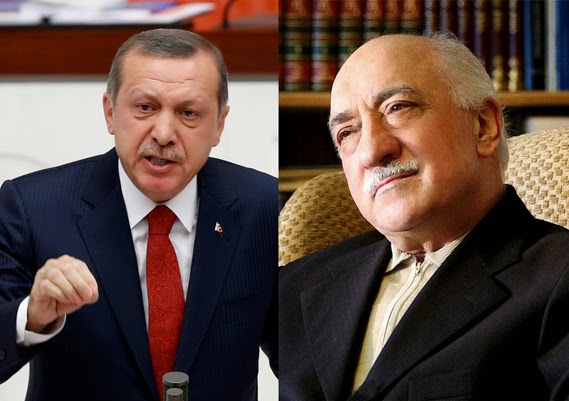
Although the U.S.-backed Gülen movement has tried to topple Turkish Prime Minister Recep Tayyip Erdogan by all available means, the controversial political leader managed to achieve a decisive victory in Turkey's recent local elections, which were viewed as a “referendum” on the Erdogan-led government. The Turkish PM did not waste any time by celebrating and instead continued his crackdown on the Gülen movement. Less than a week after the vote, the fight against the vast network of CIA puppet Fethullah Gülen led Erdogan to Azerbaijan, where Hizmet enjoys a strong presence:

Gülen: Top Issue in the Agenda of Erdoğan’s Visit to Azerbaijan

Azerbaijan has always had a tremendous importance for the Gülen movement, partly because that is where they started to expand and where they met success. Further development throughout the Caucasus and post-Soviet Central Asia helped them become one of the most powerful and influential transnational Islamic movement present in more than 130 countries. Still, Azerbaijan is the one place outside Turkey where the movement is the most involved. Indeed, numerous businesses and educational companies managed by Gülen’s disciples and sympathizers operate here. Among them are the highly visible international Qafqaz University, a network of 15 high schools and more than 20 Araz prep schools spread around the country. Besides, some major media, like the newspapers Zaman Azerbaijan, the radio station Burç and a TV channel, are close to the Gülen movement.

Read more

The New Great Game Round-Up #46

The Great Game Round-Up brings you the latest newsworthy developments regarding Central Asia and the Caucasus region. We document the struggle for influence, power, hegemony and profits between a U.S.-dominated NATO, its GCC proxies, Russia, China and other regional players.

Russian President Vladimir Putin emphasized in his letter to European leaders that there will be an increasing risk of siphoning off natural gas passing through Ukraine’s territory if Gazprom has to cease gas deliveries to Ukraine for lack of payment. Instead of returning to a reasonable dialogue with the Kremlin, Washington's European lackeys will use the opportunity to argue for turning to other gas suppliers. Although it will take years before the Trans Adriatic Pipeline (TAP) opens the Southern Gas Corridor, some people in Brussels are convinced that the Southern Gas Corridor is the solution and refuse to give up on the Trans-Caspian Gas Pipeline. Never mind that this project could trigger a military conflict with Russia. Azerbaijan and Turkmenistan are improving their relationship for the sake of the Trans-Caspian pipeline and Turkmen President Gurbanguly Berdimuhamedov has already given his blessing. Unfortunately, the Turkmen leader has a knack for supporting the wrong pipeline projects:

Turkmen President: 2015 Start for Pipeline Work

Turkmenistan's president has demanded that construction work begin in 2015 on a pipeline that will carry natural gas from his energy-rich country to Afghanistan, Pakistan and India.

Gurbanguli Berdymukhamedov said all the agreements required for the project's launch should be completed this year, state media in the Central Asian nation reported Friday.

A memorandum of understanding between the four countries linked by the TAPI pipeline was signed in 2010 and a supply deal was completed in 2012.

Read more

The New Great Game Round-Up #45

The Great Game Round-Up brings you the latest newsworthy developments regarding Central Asia and the Caucasus region. We document the struggle for influence, power, hegemony and profits between a U.S.-dominated NATO, its GCC proxies, Russia, China and other regional players.

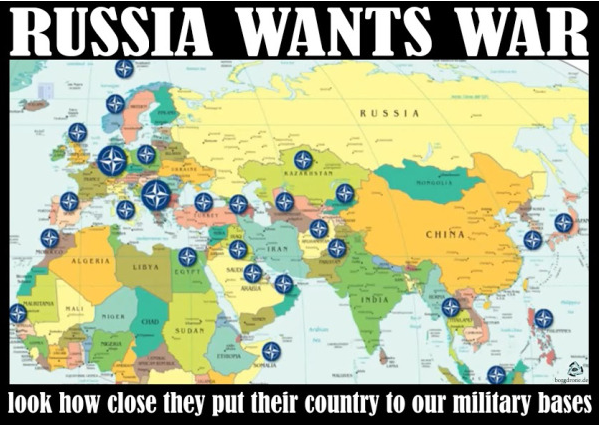
Thanks to the Ukraine crisis, the Cold War military alliance NATO does not need to pretend anymore that it is fighting terrorism and can continue its never-ending struggle against Russia right out in the open. The terror threat was quickly replaced by the Russian threat and NATO is non-stop fear-mongering about a Russian invasion of eastern Ukraine. U.S. Air Force General Philip Breedlove, NATO's top military commander, is leading the way and if he is to be taken seriously, Russian troops will have conquered Ukraine by now. On Tuesday, NATO foreign ministers met in Brussels to discuss an appropriate response to the non-existent buildup of Russian forces on Ukraine's eastern border. The U.S.-led military alliance considers, among other things, to expedite the encirclement of Russia:

Nato plans stronger military ties to ex-Soviet states south of Russia

Before the meeting, a Nato committee drafted plans “for promoting stability in eastern Europe in the current context” by increasing military co-operation with Armenia, Azerbaijan, and Moldova – all in Russia's “near abroad” and considered by Moscow as falling within its sphere of influence.

A confidential seven-page paper leaked to the German news weekly Der Spiegel proposed joint exercises and training between Nato and the three countries, increasing the “interoperability” of their militaries with Nato, and their participation in Nato “smart defence” operations.

The paper also proposed opening a Nato liaison office in Moldova, military training for Armenia, and projects in Azerbaijan aimed at securing its Caspian Sea oil and gas fields.

Read more

The New Great Game Round-Up #44

The Great Game Round-Up brings you the latest newsworthy developments regarding Central Asia and the Caucasus region. We document the struggle for influence, power, hegemony and profits between a U.S.-dominated NATO, its GCC proxies, Russia, China and other regional players.


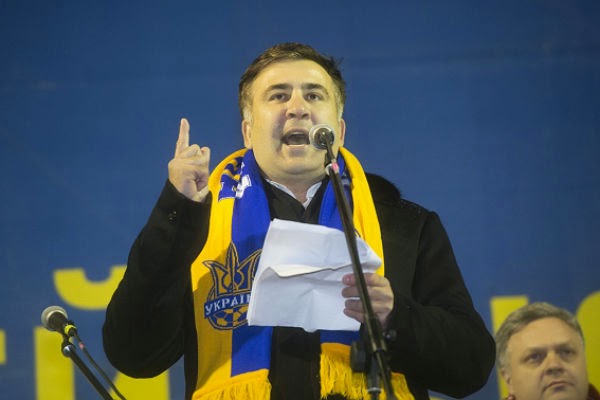
After the party of former Georgian President Mikheil Saakashvili had lost power in the 2012 Georgian parliamentary election, the controversial political leader faced more and more pressure in his home country. Even before Saakashvili left office, then Prime Minister Bidzina Ivanishvili had threatened him with criminal prosecution and went after his associates. So the former President took no chances and left Georgia after the end of his second term. Although Ivanishvili has turned his back on politics by now, the current government is still determined to hold Saakashvili accountable. After all, he is implicated in numerous criminal cases including the death of his former Prime Minister Zurab Zhvania. Since Saakashvili does not want to acknowledge that there are plenty of reasons for his questioning, he takes the same line as almost all Western politicians and media in recent weeks [emphasis mine]:

Saakashvili refuses to come home for questioning, blames Putin

Former Georgian President Mikheil Saakashvili on Tuesday made his first comments regarding the news that he is asked to testify in ten serious criminal cases in his home country.

He claims the request sent out by his country’s top prosecutor, asking him to help solve ten of the most controversial criminal cases, including the death of his own prime minister, is a ploy masterminded by Russian President Vladimir Putin.

Speaking to Rustavi 2, Saakashvili reiterated that he believes that his summoning is a direct order from the Russian president, Vladimir Putin, to ‘destroy’ him.

Read more

The New Great Game Round-Up #43

The Great Game Round-Up brings you the latest newsworthy developments regarding Central Asia and the Caucasus region. We document the struggle for influence, power, hegemony and profits between a U.S.-dominated NATO, its GCC proxies, Russia, China and other regional players.

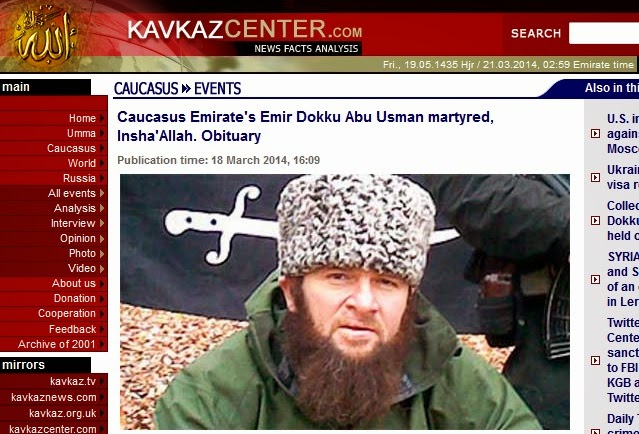
Numerous reports about the death of Russia's most wanted terrorist, Doku Umarov, have surfaced over the years only to be refuted by another video supposedly shot in the forests of the North Caucasus. Like the phony bin Laden tapes these videos are then subsequently propagated by CIA's Radio Free Europe/Radio Liberty, U.S.-Israeli “terrorism expert” organizations, which manage to beat al-Qaeda & Co. to the release of their own videos, and the mouthpiece of the Caucasus Emirate, the Kavkaz Center. The servers hosting the Kavkaz Center website are of course not to be found in the forests of the North Caucasus but rather in Sweden and Finland, where people like Mikael Storsjö do their bit to enable the Islamist insurgency in Russia. Since the Kavkaz Center has now finally confirmed Doku Umarov's death, this foreign-backed insurgency needs a new poster boy:

North Caucasus rebel leader Umarov dead, replaced: website

Russia's most wanted man, Doku Umarov, is dead and has been replaced as the leader of an Islamist insurgency in the North Caucasus, a website that sympathizes with the militants said on Tuesday.

The Kavkaz Centre website issued an obituary, calling Umarov a martyr who had “given 20 years of his life to the Jihad.”

It did not say when or how he had died, but the simultaneous release of a video address by a militant introducing himself as Umarov's replacement indicated it may have been some time ago.

Read more

The New Great Game Round-Up #42

The Great Game Round-Up brings you the latest newsworthy developments regarding Central Asia and the Caucasus region. We document the struggle for influence, power, hegemony and profits between a U.S.-dominated NATO, its GCC proxies, Russia, China and other regional players.

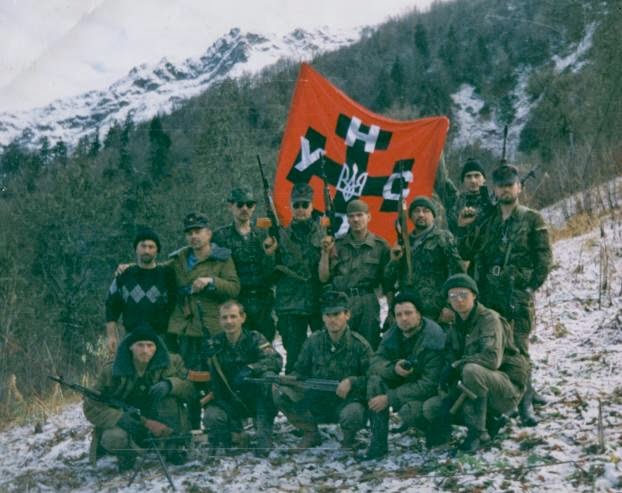
After the success of Washington's “Brown Revolution” in Ukraine, NATO is yet again aligned with fascists and neo-Nazis in its never-ending struggle against Russia and Western media is busy selling the myth of moderate Ukrainian neo-Nazis similar to the “moderate Syrian rebels”. During the days of Operation Gladio these forces were simply called “anti-communist” but now the presstitutes will have to come up with more innovative forms of propaganda to conceal the fact that the new puppet regime in Kiev boasts several neo-Nazis in key positions. So the fight against fascism in Europe falls once again to Russia, which wants to get rid of the Ukrainian “ultranationalists” for a number of reasons:

Russia to add 2 Maidan leaders to intl wanted list over Chechen militant links

Members of the Ukrainian far-right parties, including Maidan leaders Oleg Tyagnibok and Dmitry Yarosh, are to be added to the wanted list for participation in hostilities against Russian soldiers in Chechnya, Russia’s Investigative Committee says.

Russia intends to prosecute members of the UNA-UNSO ultranationalist party for being part of the gang that fought alongside militant leaders Shamil Basayev and Arab mercenary Emir Khattab [Thamir Saleh Abdullah Suwailem] in the North Caucasus in 1994-95, said Vladimir Markin, the spokesman for the Investigative Committee.

Read more

The New Great Game Round-Up #41

The Great Game Round-Up brings you the latest newsworthy developments regarding Central Asia and the Caucasus region. We document the struggle for influence, power, hegemony and profits between a U.S.-dominated NATO, its GCC proxies, Russia, China and other regional players.

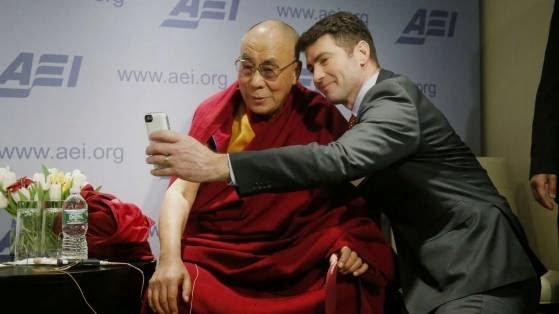
Although Washington is currently busy installing a new puppet regime in Ukraine and simultaneously trying to topple governments in Syria, Venezuela and elsewhere, President Obama still found time this week to meet with the Dalai Lama at the White House. Warnings from China that this meeting could “seriously damage” Washington's ties with Beijing were ignored as usual. The Chinese government does not tolerate any separatist activities, regardless of whether it concerns Tibet, Inner Mongolia or East Turkestan and Beijing hopes to change Western opinion in this regard:

China says it will win West over to its view on Tibet, Xinjiang

China has “time on its side” to win over Western opinion to its point of view on the restive regions of Tibet and Xinjiang, a senior official wrote on Wednesday, vowing with unusually strong language to ignore foreign pressure on human rights.

Zhu Weiqun, chairman of the ethnic and religious affairs committee of the top advisory body to parliament, acknowledged this would be a difficult task but said dissenting voices were beginning to be heard in the West.

Zhu said the West would finally “see the real face of the Dalai clique and 'East Turkestan',” referring to exiled Tibetan spiritual leader the Dalai Lama and the militant forces China says operate in Xinjiang.

© Photo AP/Charles Dharapak

Read more

The New Great Game Round-Up #40

The Great Game Round-Up brings you the latest newsworthy developments regarding Central Asia and the Caucasus region. We document the struggle for influence, power, hegemony and profits between a U.S.-dominated NATO, its GCC proxies, Russia, China and other regional players.

Considering all the terrorism fear-mongering in the run-up to the Sochi Olympics, the last few days in Russia's North Caucasus have been remarkably uneventful. Besides the usual anti-terror operation in Dagestan, resulting in three dead insurgents, and Tengiz Guketlov, terrorist leader from Kabardino-Balkaria, claiming responsibility for the six killings in the Stavropol region last month, there is not much to report. Terror mastermind Prince Bandar bin Sultan is apparently not going to act on his threats because he is busy supplying the al-Qaeda mercenaries in Syria with more anti-aircraft missiles and his go-to guy in the North Caucasus, Doku Umarov, appears to be dead. Moreover, Russia's “ring of steel” is quite effective. But not everybody is happy with the Russian security operation:

U.S. feeling shut out of Russian security operation at Sochi

U.S. intelligence officials are frustrated that the Russian government is withholding information about threats to Olympic venues coming from inside Russia, several lawmakers said during talk shows Sunday.

“We aren't getting the kind of cooperation that we'd like from the Russians in terms of their internal threats,” Rep. Adam Schiff (D-Calif.), a member of the House Intelligence Committee, said in an appearance on “Fox News Sunday.”

© Photo Reuters/Sergei Karpukhin

Read more

Design a site like this with WordPress.com
Get started