The Great Game Round-Up brings you the latest newsworthy developments regarding Central Asia and the Caucasus region. We document the struggle for influence, power, hegemony and profits between a U.S.-dominated NATO, its GCC proxies, Russia, China and other regional players.
On Friday, a lavish opening ceremony kicked off the 22nd Olympic Winter Games in Sochi. This year's Winter Olympics are not only the most expensive Games in history but also one of the most politicized sports events ever. Western media used the Games to ramp up the ongoing smear campaign against the Russian government and Western politicians proved that they are only interested in one form of sport: boycotting the Sochi Olympics. But Russia is not on its own in the intensifying Cold War against the United States and its allies. Beijing strongly supports Moscow and China's President Xi Jinping demonstrated this by travelling to the Black Sea resort, the first trip of a Chinese leader to major sports event overseas. The Chinese government criticized the West for constantly attacking Russia and drew a lesson from this:
Sochi Games consolidate Sino-Russian ties
The first warning Sochi 2014 has rendered China is that implementation of “Western-style democracy” will not help reach a mood of détente with Western nations, which adopt attitudes toward big powers like China and Russia in line with their geopolitical interests.
Xi's attendance at the Games in no way implies that China is in confrontation with the West. In actuality, the aggregate power of both Beijing and Moscow is still far less than that of the Western world.
Nevertheless, bilateral cooperation between Beijing and Moscow is highly resilient. Political dynamics determines that the two global strategic powers are unlikely to be isolated, so it is doomed to fail when the West attempts to separate China from Russia.
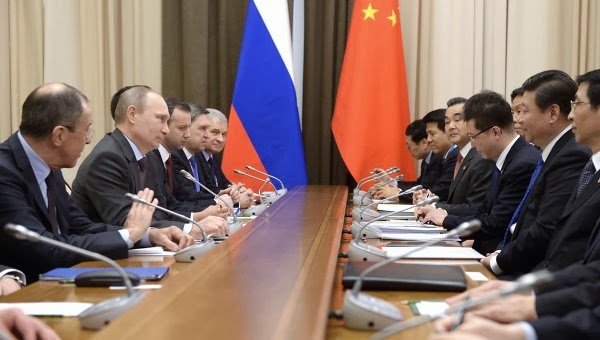 |
| © Photo RIA Novosti/Alexey Nikolsky |

 The Venezuela News, The Venezuela Latest