The New Great Game Round-Up #29

The Great Game Round-Up brings you the latest newsworthy developments regarding Central Asia and the Caucasus region. We document the struggle for influence, power, hegemony and profits between a U.S.-dominated NATO, its GCC proxies, Russia, China and other regional players.

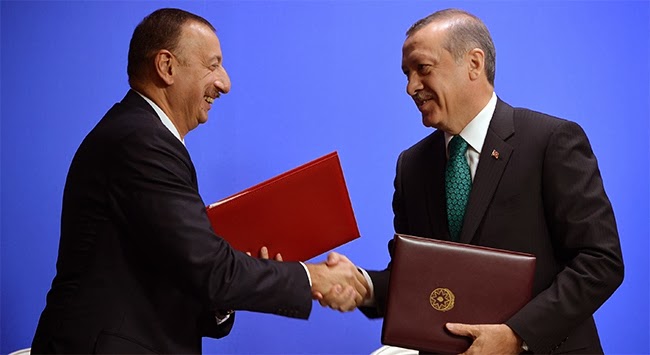
After Ilham Aliyev won the heavily rigged presidential election in Azerbaijan and consolidated his power, the Azerbaijani leader decided to visit close ally Turkey on his first trip abroad. Baku and Ankara maintain very good relations and plan to increase cooperation in various areas. With the Kars-Tbilisi-Baku railway near completion, the Azerbaijani and Turkish governments are focusing on the next major project, the construction of the Trans-Anatolian gas pipeline (TANAP), which is set to begin in early 2014:

Turkey and Azerbaijan cement bilateral ties

“We are taking steps on the area of energy which has strategic importance,” Prime Minister Recep Tayyip Erdoğan said, speaking at a press conference with Azerbaijani President Ilham Aliyev. Turkey and Azerbaijan would work to bilaterally boost trade up from the current level of $4.2 billion per annum to $15 billion by 2020, Erdoğan noted.

Read more

The New Great Game Round-Up #28

The Great Game Round-Up brings you the latest newsworthy developments regarding Central Asia and the Caucasus region. We document the struggle for influence, power, hegemony and profits between a U.S.-dominated NATO, its GCC proxies, Russia, China and other regional players.

After the Aliyev regime had already made a mockery of democracy in the Azerbaijani presidential election a few weeks ago, it was now the turn of Tajikistan's President Emomalii Rahmon to get the election in his country over and done with. Rahmon did not have a hard time staying in power since the Tajik people as well as the Organization for Security and Co-operation in Europe (OSCE) were not impressed with his “opponents” in the presidential poll:

OSCE slams lack of choice in Tajikistan poll

In power for more than 20 years, Rakhmon won over 83 percent of the vote according to official figures. He faced five little-known, mainly loyal challengers. His only serious rival was barred from running.

Read more

The New Great Game Round-Up #27

The Great Game Round-Up brings you the latest newsworthy developments regarding Central Asia and the Caucasus region. We document the struggle for influence, power, hegemony and profits between a U.S.-dominated NATO, its GCC proxies, Russia, China and other regional players.

Last Monday, China's famous Tiananmen Square became quite unexpectedly the scene of another tragic event. Three individuals drove an SUV with a Xinjiang license plate through a crowd of people. The horror ended when the car crashed and burst into flames. Two innocent bystanders were killed along with the three occupants of the vehicle and 40 people were injured. Chinese police later identified the SUV driver as Usmen Hasan and his two passengers as his mother Kuwanhan Reyim and his wife Gulkiz Gini. Doubts about the nature of this incident were quickly dispelled when police searched the SUV and rounded up several suspects in connection with the attack:

Police identify Tiananmen car crash as terrorist attack

Chinese police have identified Monday's deadly crash at downtown Beijing's Tiananman Square as a terrorist attack and five suspects have been detained.

Police found gasoline, equipment full of gasoline, two knives and steel sticks as well as a flag with extremist religious content in the jeep.

© Photo BBC

Read more

The New Great Game Round-Up #26

The Great Game Round-Up brings you the latest newsworthy developments regarding Central Asia and the Caucasus region. We document the struggle for influence, power, hegemony and profits between a U.S.-dominated NATO, its GCC proxies, Russia, China and other regional players.

While China is building a New Silk Road and wrapping up deal after deal in Central Asia, India has so far failed to secure much-needed energy supplies from the region. Instability in Afghanistan and problematic relations with neighboring Pakistan complicate India's efforts even more since the country lacks direct access to Central Asia. New Delhi still dreams of the implementation of the Turkmenistan-Afghanistan-Pakistan pipeline but this project has for now been suspended. In order to strengthen relations with the Central Asian states and to increase the current trade volume of merely $700 million a new, more pro-active approach is desperately needed, as Dr. Arvind Guptar, Director General of India's Institute for Defence Studies and Analyses, recently argued. Indian Prime Minister Manmohan Singh addressed this issue during his visit to Russia this week and made the case for closer cooperation between the two countries in Central Asia:

India looks forward for closer cooperation with Russia in Central Asia – India's Prime Minister Manmohan Singh

Events in central and southern part of Central Asia are important for security of both Russia and India. Currently India is strengthening its historical ties with Central Asian states and looks forward for closer cooperation with Russia in the region, he said.

The minister said that cooperation between Russia and India can play an important role in promoting peace, stability and economic development in Afghanistan. It may also be effective in dealing with common challenges such as extremism, terrorism and drug trafficking, he added.

Read more

The New Great Game Round-Up #25

The Great Game Round-Up brings you the latest newsworthy developments regarding Central Asia and the Caucasus region. We document the struggle for influence, power, hegemony and profits between a U.S.-dominated NATO, its GCC proxies, Russia, China and other regional players.


Millions of labor migrants, in particular from Central Asian countries, travel to Russia in search of work. This has triggered xenophobia and hate attack, as once again demonstrated by this week's mass riot in Moscow after the stabbing of a 25-year-old Russian:

Over 380 detained after anti-migrant riot in southern Moscow

Moscow police said they detained some 380 people during the mass rioting in a southern district of the city. A mixed crowd of nationalists and locals attacked a warehouse run by natives of the Caucasus, blaming a migrant for the fatal stabbing of a local.

© Photo RIA Novosti/Anton Denisov

Local authorities responded by closing the attacked warehouse and arresting 1.200 migrants. Sergey Sobyanin, the Mayor of Moscow, supports tougher measures against illegal migration and there have been several raids targeting migrant workers in the Russian capital in recent time.
Read more

The New Great Game Round-Up #24

The Great Game Round-Up brings you the latest newsworthy developments regarding Central Asia and the Caucasus region. We document the struggle for influence, power, hegemony and profits between a U.S.-dominated NATO, its GCC proxies, Russia, China and other regional players.

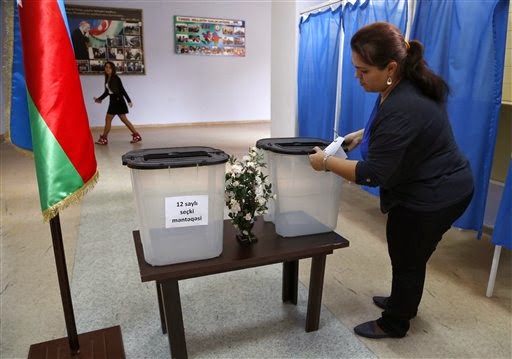
This week's presidential elections in Azerbaijan ended with the expected result. Incumbent President Ilham Aliyev was officialy reelected, winning almost 85 percent of the vote. Few would have mentioned the fraudulent elections and the crackdown of the Aliyev regime on the opposition if the Azerbaijani authorities had not committed a blunder [emphasis mine]:

Oops: Azerbaijan released election results before voting had even started

Even still, one expects a certain ritual in these sorts of authoritarian elections, a fealty to at least the appearance of democracy, if not democracy itself. So it was a bit awkward when Azerbaijan's election authorities released vote results – a full day before voting had even started.

© Photo AP/Sergei Grits

So even Aliyev's close allies in Washington were forced to back the observations made by the Organization for Security and Cooperation in Europe (OSCE). Unimpressed by the Azerbaijani version of democracy, monitors of the pan-European rights watchdog criticized “serious” and “overwhelming” violations during the elections:

Observers Find Violations at 'All Stages' of Azerbaijan Elections

Observers from the Organization for Security and Cooperation in Europe identified voter intimidation, a restrictive media environment during the election campaign and violations at all stages of the voting process in a preliminary report on the elections released Thursday.

Read more

The New Great Game Round-Up #23

The Great Game Round-Up brings you the latest newsworthy developments regarding Central Asia and the Caucasus region. We document the struggle for influence, power, hegemony and profits between a U.S.-dominated NATO, its GCC proxies, Russia, China and other regional players.

Afghanistan's northeastern province of Badakhshan and its role in Washington's plans for the region has been one of the major issues discussed in the weekly round-ups. In the last few days Badakhshan was again making the headlines with heavy clashes between Taliban and Afghan security forces erupting in the remotely located province. Taliban fighters succeeded in taking control over Kuran wa Munjan District which sparked new concerns about of the security of the upcoming Afghan elections:

News Analysis: Security to remain major threat ahead of Afghan elections

To demonstrate its ability to disrupt the polls, the Taliban fighters overran Kuran-o-Manjan District in the relatively peaceful Badakhshan province over weekend, prompting the Interior Ministry to promise that necessary preventive measures would be taken ahead of elections.

© Photo AP/Rahmat Gul

Read more

The New Great Game Round-Up #22

The Great Game Round-Up brings you the latest newsworthy developments regarding Central Asia and the Caucasus region. We document the struggle for influence, power, hegemony and profits between a U.S.-dominated NATO, its GCC proxies, Russia, China and other regional players.

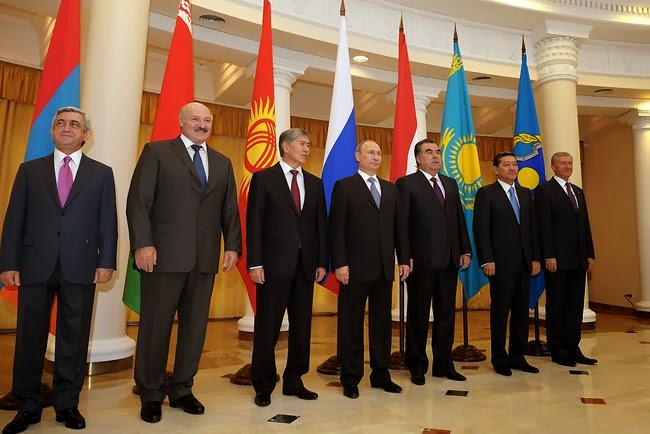
As anticipated last week, the CSTO leaders agreed on Monday during the Collective Security Council meeting in Sochi to provide Tajikistan with joint assistance in order to reinforce the Tajik-Afghan border. Tajikistan's President Emomalii Rahmon gave further details of the projects which will be supported by the Collective Security Treaty Organization [emphasis mine]:

CSTO to help Tajikistan strengthen control of its common border with Afghanistan

“The government of republic and its relevant bodies will solve a number of tasks related to strengthening the Tajik-Afghan border. Among these tasks are constructing new buildings of frontier posts, restoring warning and signaling systems and providing border troops with means of air patrol and surveillance as well as radar aids,” Rahmon said.

© Photo Presidential Press & Information Office, Russia


Read more

The New Great Game Round-Up #21

The Great Game Round-Up brings you the latest newsworthy developments regarding Central Asia and the Caucasus region. We document the struggle for influence, power, hegemony and profits between a U.S.-dominated NATO, its GCC proxies, Russia, China and other regional players.

At the beginning of this week, a series of terror attacks shook Russia's North Caucasus and proved that President Vladimir Putin's concerns about security in this region are definitely justified:

3 police dead, 6 wounded in suicide bombing, attempted attacks in Russia’s south

A suicide attacker set off a powerful bomb near a police station in Russia’s Chechen Republic, killing three officers. His possible accomplice injured two policemen in neighboring Ingushetia while a third one wearing a suicide vest was detained.

© Photo AP Photo/Musa Sadulayev

Local law enforcement officials suspected that the attacks in Chechnya and Ingushetia were organized by the same militant group. The men of Beslan Makhauri's gang, who operate from mountainous forests at the Chechen-Ingush border, were identified as the likely perpetrators. Russia's Federal Security Service (FSB) confirmed this and accused NATO's favorite Chechen freedom fighter, Doku Umarov, of ordering the terror campaign:

Russia's FSB Says Umarov Loyalist Behind Attacks

The head of Chechnya's FSB branch, Andrei Seryozhnikov, accused Umarov of ordering the attacks but said the commander of the Sunzha wing of the North Caucasus insurgency, Beslan Makhauri — who was reportedly killed three years ago — actually organized the bombings.

Read more

The New Great Game Round-Up #20

The Great Game Round-Up brings you the latest newsworthy developments regarding Central Asia and the Caucasus region. We document the struggle for influence, power, hegemony and profits between a U.S.-dominated NATO, its GCC proxies, Russia, China and other regional players.

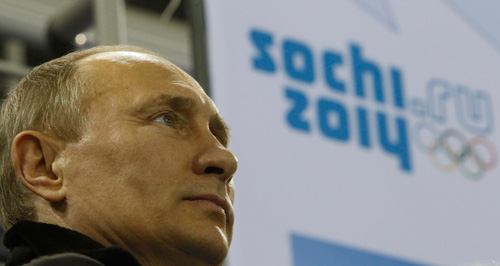
Prince Bandar bin Sultan's threat, to unleash the Chechen terrorists under his command during the Winter Olympics in Sochi next year, is taken seriously in Moscow. So Russian President Vladimir Putin was particularly enraged by accusations of “so-called widespread abuse of citizens’ rights in the North Caucasus” voiced in the Western media and by human rights organizations. Putin blasted the biased coverage and highlighted Russia's struggle against foreign-funded terrorists:

Russia Must Respond to ‘Baseless’ Reports on Caucasus – Putin

“We also face destructive anti-Russian activities by certain foreign countries and non-governmental and international organizations under their control that still see the North Caucasus as a foothold for their attempts to destabilize all of Russia, to damage our economy, to undermine Russia’s influence and to limit our activities on the international arena,” Putin told Russia’s Security Council.

“Certain foreign countries” translates obviously into the United States and its allies. President Putin emphasized that attempts aimed at destabilizing Russia should be crushed. While there have been some positive changes according to the Russian leader, the situation in the North Caucasus has to be further improved ahead of the Olympic Games:

Putin Says Security Not Improving Fast Enough in North Caucasus

President Vladimir Putin ordered intelligence agencies Monday to step up efforts to secure a volatile region near next year's Winter Olympics, saying the situation was not improving fast enough.

© Photo AFP/Sergei Karpukhin


Read more

Design a site like this with WordPress.com
Get started